
Annie Lord Of Miami Homes for All: How We Are Helping To Make Housing More Affordable
By Aaron Weiner | Medium
I learned that trying to make policymakers “like” me wouldn’t guarantee collaboration. Proving impact through rigorous work matters more than being perceived as pleasant.
In many large cities in the US, there is a crisis caused by a shortage of affordable housing options. This has led to a host of social challenges. In this series called “How We Are Helping To Make Housing More Affordable” we are talking to successful business leaders, real estate leaders, and builders, who share the initiatives they are undertaking to create more affordable housing options in the US.
As a part of this series, we had the pleasure of interviewing Annie Lord.
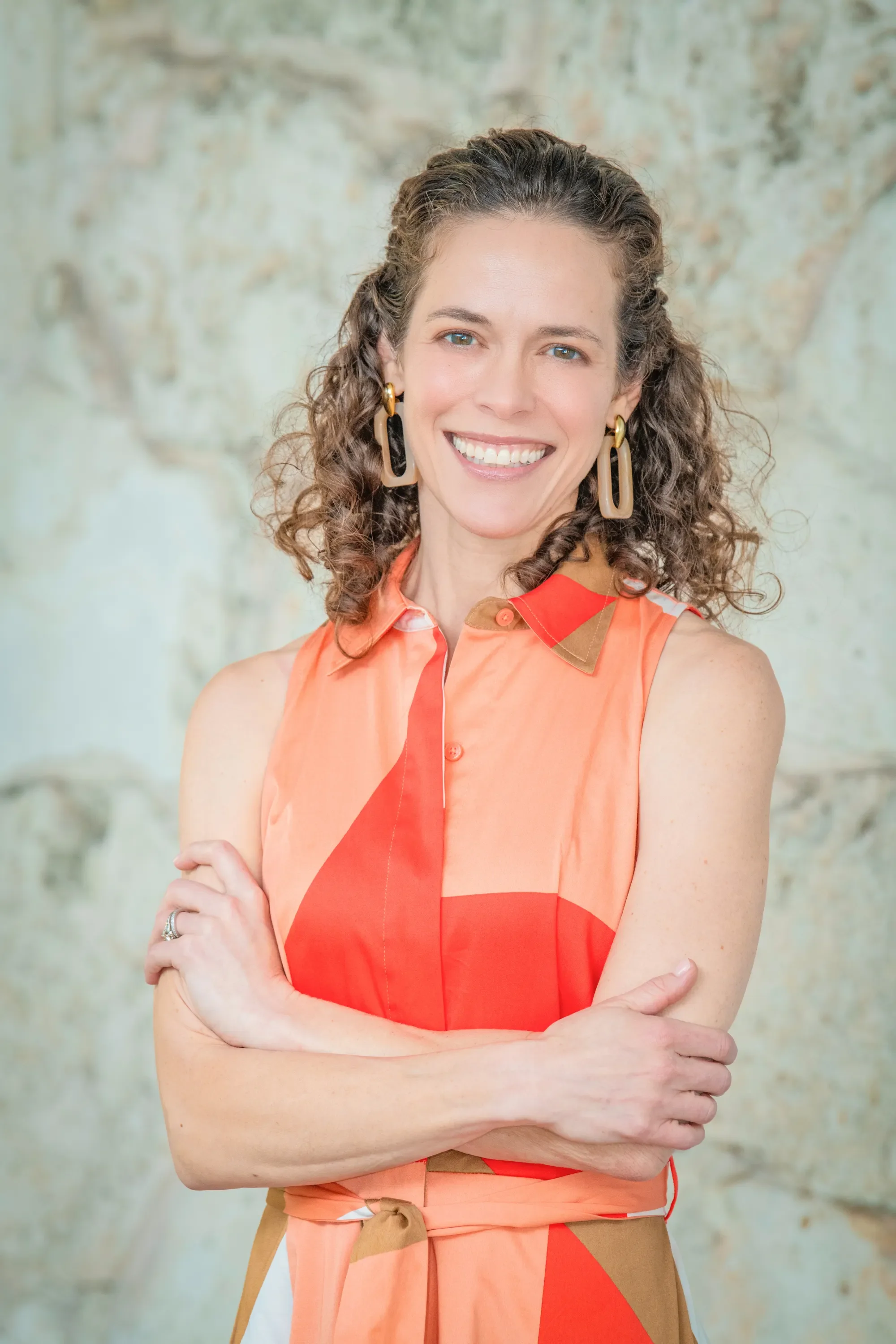
Annie Lord is the Executive Director of Miami Homes for All, a nonprofit dedicated to advancing housing affordability and ending homelessness in Miami-Dade. A community development advocate with deep roots in the region, she has spent her career championing policy solutions that expand access to stable housing and economic opportunity. Annie believes that safe, affordable housing is foundational to a thriving, inclusive Miami.
Thank you so much for doing this with us! Before we dig in, our readers would like to get to know you a bit more. Can you tell us a bit about your “backstory”? What led you to this particular career path?
I grew up in Coconut Grove, the daughter of a Cuban refugee, with family still on the island. My daily experiences were a constant reminder of life’s fragility and the thin line between privilege and struggle. Driving to elementary school, I’d watch the landscape change — from my tree-lined upper-middle-class neighborhood to the lower-income West Grove, where the tree canopy disappeared and buildings showed signs of neglect.
Having first cousins in Havana during the Special Period exposed me to how quickly a modernized, developed life could be lost. I saw daily reminders that what I had was extraordinary, but not guaranteed. It wasn’t about being extra deserving, but about recognizing a man-made problem of inequality.
My classmates and neighbors lived dramatically different realities, often just a quarter-mile apart. I realized that if I had been born slightly north of where I was, my entire life trajectory would be different. This awareness wasn’t about guilt, but about understanding systemic inequities.
These experiences drew me to community development. I wanted to work where I lived and help my neighbors meaningfully address poverty. Since 2003, I’ve dedicated my career to working with families, initially in small business development and direct services, and eventually focusing on housing as the critical intervention that can transform lives.
I discovered that stable housing isn’t just about a roof — it’s about enabling education, job stability, mental health, and the ability to make positive life choices. Housing is foundational. Without it, everything else falls apart. That personal connection to housing as a driver of equity and opportunity is what ultimately led me to Miami Homes for All. My work is about creating those opportunities for everyone.
Can you share the most interesting story that happened to you since you began your career?
The most interesting moment is actually happening right now. What’s fascinating is seeing how different stakeholders in Miami are stepping up to address affordable housing — and doing so with genuine excitement and collaboration.
I’m witnessing property owners of all types — public sector, individuals, nonprofits, churches — becoming genuinely engaged in solving this challenge. But what’s truly remarkable is how everyone is playing a coordinated role. Policymakers are creating enabling frameworks. Funders are developing new loan products. Voters are consistently showing willingness to invest in community needs.
For instance, Miami voters have a history of approving targeted initiatives like the Homeless Trust and Children’s Trust, demonstrating a remarkable commitment to shared community investment. We’re seeing funders create new funding models, policymakers facilitating partnerships, and community members challenging traditional neighborhood boundaries.
It’s not just about solving a discrete problem — it’s about watching an entire ecosystem cooperate. Each player — from individual property owners to city officials — is stepping up, coordinating their actions, and believing they can make a meaningful difference. That collaborative spirit, that sense of collective possibility, is the most interesting story of my career right now.
Are you able to identify a “tipping point” in your career when you started to see success? Did you start doing anything different? Are there takeaways or lessons that others can learn from that?
First, I realized the importance of living my values. After graduate school, I had what looked like success, but I wasn’t truly happy. When I moved back to Miami, near my family, things clicked. By understanding and living according to my core priorities, my professional and personal life started falling into place. I made lifelong friends, established my career, and found genuine fulfillment doing what I love.
The second critical tipping point was understanding that setting clear boundaries is just as crucial to productive relationships as nurturing them. I learned that being explicit about limits — in both professional and personal contexts — actually benefits the work. Without clear boundaries, partnerships can become ineffective or even harmful.
These weren’t just professional lessons, but fundamental shifts in how I approach collaboration and personal growth. Setting limits doesn’t mean being inflexible; it means being clear about expectations, deliverables, and mutual responsibilities. When everyone understands the structure of a partnership, the work can truly flourish.
The key takeaway is that success isn’t just about hard work, but about self-awareness, intentional prioritization, and creating healthy, transparent relationships. By being true to my values and maintaining clear boundaries, I’ve been able to drive more meaningful impact in community development.
None of us are able to achieve success without some help along the way. Is there a particular person to whom you are grateful who helped get you to where you are? Can you share a story about that?
I’m grateful for several mentors who took risks on me, but one consultant stands out. Over six or seven years of collaboration, she demonstrated something profoundly important: the art of setting clear, critical boundaries.
This experienced professional showed me that successful partnerships aren’t just about good intentions, but about meticulous structure. She taught me that seemingly bureaucratic elements — like clear scopes of work, precise deliverables, defined timeframes, and explicit process flows — aren’t obstacles, but essential safeguards.
What I learned from her was that these structures prevent potential abuses and create accountability. In collaborative work, especially across multiple partners, it’s easy for responsibilities to become blurry. She demonstrated how carefully articulated expectations can actually facilitate smoother, more productive collaborations.
Other leaders also believed in me, putting me in growth positions before I had fully proven myself. They took leaps of faith that encouraged me to work harder and deliver more. But this particular mentor’s lesson about professional boundaries has been transformative — not just in how I work, but in how I understand effective collaboration.
It wasn’t about creating bureaucracy, but about creating clarity that allows everyone to perform at their best.
Do you have a book, podcast, or talk that’s had a deep impact on your thinking? Can you share a story with us? Can you explain why it was so resonant with you?
The Center for Community Investment profoundly impacted my thinking by teaching me that investment capital flows to specific deals, not abstract ideas. They showed me that in public interest work, especially affordable housing, you must move beyond passionate storytelling and present precise, executable projects.
Before this insight, I was like many in the nonprofit sector — making compelling cases about community needs and suffering. But the Center revealed a critical lesson: until you can articulate exactly what you’re going to build, attracting capital is incredibly difficult.
This wasn’t just a theoretical concept. It fundamentally transformed how we approach development and funding. Instead of just describing problems, we now prepare investment-ready deals with clear structures, specific outcomes, and tangible community impacts.
The lesson extends beyond housing: the most effective advocacy isn’t just about describing challenges, but showing a clear, fundable pathway to solution. It’s about turning good intentions into actionable, investable projects that can create real change.
Can you please give us your favorite “Life Lesson Quote”? Can you share how that was relevant to you in your life?
When asked if he plays to win or hates to lose, Kobe Bryant once said, “I play to learn.” That really resonates with me. Success and leadership aren’t about perfection. They’re about curiosity, humility, and growth. I try to show up to every challenge with the mindset of, “What can I learn from this?”
Ok super. Let’s now shift to the main part of our discussion about the shortage of affordable housing. Lack of affordable housing has been a problem for a long time in the United States. But it seems that it has gotten a lot worse over the past five years, particularly in the large cities. I know this is a huge topic, but for the benefit of our readers can you briefly explain to our readers what brought us to this place? Where did this crisis come from?
The affordable housing crisis stems from two fundamental economic realities. First, wages have not kept pace with housing costs. In Miami, and nationwide, we’re seeing rents and home prices skyrocket while wages remain relatively stagnant. This is especially acute in cities with large service-sector economies like ours, where 70% of new jobs pay less than $20 per hour.
The second critical factor is deliberate policy decisions that have constrained housing supply. For decades, we’ve prevented increased housing density through restrictive zoning and what’s known as NIMBYism — “Not In My Backyard” mentalities. This isn’t just about practical concerns like parking or traffic, but often reflects deeper, more troubling dynamics of fear and protectionism.
Inflationary pressures have compounded the problem. Construction material costs have risen, capital is more expensive, and domestic migration patterns have shifted housing demand. But underlying these economic factors is a more profound issue: many communities have actively resisted creating diverse, accessible housing.
Often, this resistance is rooted in fear of the “other” — concerns about who might move into a neighborhood, how they might change its character. Yet data consistently shows these fears are unfounded. Mixed-income developments don’t decrease property values or overwhelm schools; they create more vibrant, resilient communities.
The crisis isn’t inevitable. It’s the result of specific choices we’ve made — choices we can also choose to change.
Can you describe to our readers how your work is making an impact to address this crisis? Can you share some of the initiatives you are leading to help correct this issue?
At Miami Homes for All, our approach is ecosystem-wide, focusing on increasing affordable housing supply and improving access for lower-income families. We’re taking a multi-pronged strategy that goes beyond traditional solutions.
First, we’re diversifying housing types. Historically, affordable housing meant large-scale, hundreds-of-units subsidized developments. We’re now championing small-scale, multi-family buildings — leveraging Miami’s existing architectural patterns to create more flexible, integrated housing options.
Our 3C initiative is transforming the landscape by changing policy frameworks, increasing developer capacity, and finding opportunities for small-scale multi-family developments. We’re not just talking about the problem; we’re creating actionable pathways for new housing models
Equally important is our work connecting willing landlords with potential tenants. Surprisingly, we’ve discovered that market demand exists on both sides — landlords have units, families need housing — but they often can’t find each other. Our navigation services are bridging that gap, and the results are promising. We’re housing families out of shelters remarkably quickly.
We measure success through two key metrics: increasing affordable housing supply and expanding lower-income families’ access to housing. By changing the ecosystem — from policy to funding to development capacity — we’re creating sustainable solutions.
The most exciting part? We’re seeing property owners, policymakers, and community members increasingly excited about collaborative approaches to solving this challenge.
Can you share something about your work that makes you most proud? Is there a particular story or incident that you found most uplifting?
The most uplifting story involves Dr. Evalina Bestman, an 83-year-old woman who embodies the spirit of community responsibility. After a lifetime of serving her community, she didn’t slow down — she stepped up to take on affordable housing challenges.
Her story is remarkable because it demonstrates that commitment to community has no age limit. Despite having already dedicated decades to service, she looked around and said, “I can do more.” Her willingness to engage, to learn, and to take action at 83 is incredibly inspiring.
What makes her story so powerful is how it reflects the broader ecosystem of change we’re trying to create. It’s not about one heroic solution, but about everyone — regardless of age, background, or resources — playing a role in addressing our housing challenges.
Dr. Bestman represents the kind of community leadership we need: someone who sees a problem, doesn’t just complain about it, but actively seeks to be part of the solution. Her story reminds us that meaningful change happens when individuals are willing to step up, collaborate, and believe they can make a difference.
It’s not just about her individual action, but what her story represents: the collective potential we have to reshape our community when we’re willing to engage, to learn, and to act.
In your opinion, what should other home builders do to further address these problems?
Think beyond luxury. There’s a strong business case for building mixed-income communities. We need developers to be part of the solution — to work with policymakers, to embrace innovation in design and construction, and to help expand the types of housing available.
Developers should view affordable housing as an opportunity, not an obligation. Look for ways to integrate affordability into projects — whether by carving out a portion of units for lower-income residents, creating mixed-income developments, or balancing luxury projects with affordable options.
I’m seeing developers increasingly feel compelled to give back to their community. The key is to see this as more than compliance — it’s about leveraging professional expertise to create meaningful change. Ask yourself: How can I use my skills to contribute to solving our housing challenges? The goal is simple: make space for everyone in our city’s development.
Can you share three things that the community and society can do to help you address the root of this crisis? Can you give some examples?
Communicate Priorities to Elected Officials: Take every opportunity to tell local commissioners, council members, and supervisors that affordable housing is a top priority. When constituents consistently and clearly communicate their concerns, elected officials are more likely to take meaningful action. It’s not just about talking — it’s about making it clear that inaction is unacceptable.
Vote on Housing Initiatives: When housing-related referendums appear on the ballot — whether they’re general obligation bonds, property tax measures, or funding initiatives — show up and vote. Miami has a strong history of voters approving measures like the Homeless Trust, Children’s Trust, and school district bonds. These votes directly translate into resources for affordable housing.
Challenge Your Neighborhood’s Fears: Be willing to think more expansively about your community. When development proposals emerge, question the underlying fears driving opposition. Investigate the actual data about how new housing developments impact neighborhoods. Are concerns about property values, school overcrowding, or traffic supported by evidence? Often, they’re not.
If you had the power to influence legislation, are there laws which you would like to see introduced that might help you in your work?
The most critical legislative priority is creating pathways for public funding dedicated to affordable housing. I want state and local decision-makers to remove barriers preventing municipalities from raising targeted funds through voter-approved referendums. Miami has already demonstrated voters’ willingness to support strategic tax measures like the Homeless Trust.
These funding mechanisms are essential because traditional lending won’t solve our affordability crisis. By establishing clear, voter-supported financial streams, we can increase housing supply, support mixed-income developments, and provide resources for community-focused housing projects. The goal is to give communities direct democratic power to address their housing needs strategically and transparently.
What are your “5 things I wish someone told me when I first started leading my company” and why? Please share a story or example for each.
Stop Seeking Approval: I learned that trying to make policymakers “like” me wouldn’t guarantee collaboration. Proving impact through rigorous work matters more than being perceived as pleasant.
Hire Slow, Fire Fast: I once kept underperforming employees too long, which burned out my high-performing team. Delaying difficult personnel decisions compromised our entire organization’s effectiveness. I lost valuable team members by hesitating to make necessary cuts.
Bad Times Will Always End: During post-pandemic challenges with limited funding and staff, I learned to retrench, focus on what I could accomplish, and trust that persistent effort would create future opportunities.
Know When to Cut Bait: Sometimes you must let go of programs or approaches that aren’t delivering. If something consistently feels wrong, trust that instinct. Whether it’s an ineffective employee or an unproductive initiative, being willing to pivot is crucial.
Prepare for Unexpected Growth: Have a strategic plan for scaling. As your work becomes successful, you’ll need infrastructure and systems to manage increased demand without becoming unsustainable.
You are a person of enormous influence. If you could inspire a movement that would bring the most amount of good to the most amount of people, what would that be? You never know what your idea can trigger. :-)
I would inspire a “Yes In My Backyard” movement — not as a naive political statement, but as a profound recommitment to community values. This isn’t about blind idealism, but about recognizing our fundamental interconnectedness.
Most people genuinely value connection, community, and the idea of a “village” — yet we’ve created systems that isolate us. By inviting others into our neighborhoods, especially those with different economic backgrounds, we create opportunities for genuine understanding.
This movement is about more than housing. It’s about acknowledging that we need everyone in our community. When we restrict access, when we prevent people from living in certain spaces, we breed isolation that ultimately damages everyone — not just those being excluded.
I know this might sound idealistic to some. They might hear “mixed housing” and think of progressive rhetoric. But it’s actually about something universal: our shared human need for connection, mutual understanding, and collective progress.
We need each other. And creating physical spaces that reflect that interdependence is how we begin to rebuild genuine community. It’s not just about building housing — it’s about building human connection.
Is there a person in the world, or in the US whom you would love to have a private breakfast or lunch with, and why? He or she might just see this, especially if we tag them. :-)
I would love to have lunch with Bryan Stevenson, founder and executive director of the Equal Justice Initiative. His work at the intersection of systemic inequity, housing, and community development deeply resonates with my own mission.
Stevenson has consistently demonstrated how structural barriers, particularly those rooted in racial and economic disparities, prevent communities from accessing fundamental opportunities. I’m particularly interested in exploring how we could apply his strategies of radical empathy and targeted interventions to housing policy. How do we not just build affordable housing, but truly create pathways for community restoration and economic mobility?
Stevenson has consistently demonstrated how structural barriers, particularly those rooted in racial and economic disparities, prevent communities from accessing fundamental opportunities. I’m particularly interested in exploring how we could apply his strategies of radical empathy and targeted interventions to housing policy. How do we not just build affordable housing, but truly create pathways for community restoration and economic mobility?
Who knows? Maybe we’d end up designing a collaborative initiative that could be replicated in communities across the country!