
Florida is missing 121,000 homes, but the problem is very localized
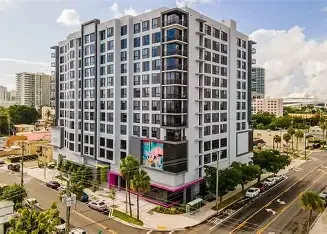
A new report on Florida housing shows Miami-Dade County has the highest deficit of residential units in the state.
Key takeaways
Florida is short roughly 121,000 homes overall, but the severity of the housing shortage varies widely by county rather than tracking neatly with population size.
Miami-Dade, Broward and Hillsborough counties have the largest deficits, while Orange County stands out with a modest housing surplus despite strong growth.
The report argues that chronic shortages are driven by local zoning, permitting and affordability constraints, meaning solutions must be pursued primarily at the local level rather than statewide.
A new report on Florida’s housing supply suggests that the state’s severe shortage of homes is not equally distributed.
The Sunshine State faces a gap of roughly 121,000residential units, according to the Florida Housing Data Project, a report the DeVoe L. Moore Institute at Florida State University in Tallahassee released in April in conjunction with two think tanks: the Reason Foundation and the Florida Policy Project.
The report breaks that number down to 66,000 missing homes for sale and 55,000 needed rental units and then segments by county. Sam Staley, director of the Moore Institute, said understanding local data is really the key to tackling the problem.
“We really need to know if local markets are out of balance,” Staley told Homes.com. “You’re definitely seeing that different markets are going in and out of balance at different times.”
According to the report, Miami-Dade Countyhas the most prominent shortage, 12,711. Annie Lord, executive director of nonprofit Miami Homes for All, said she was not surprised to see her county as the most distressed.
“We have been aware of a really significant housing shortage for both renters and owners … for a while,” Lord said.
After Miami-Dade, the next highest shortage was Broward County, home of Fort Lauderdale, which is shy of 10,233 units, followed by Tampa’s Hillsborough County, with an 8,360-unit deficit. Duval County, home of Jacksonville, had the fourth-highest deficit at 6,941.
But the size of the metropolitan populations alone cannot predict the level of shortage. Orange County, where Orlando sits, has a 2,275-unit surplus, according to the report.
The housing report used five-year interval data from the American Community Survey and other sources to drill down on local disparities, primarily measuring how supply is keeping up with, or falling behind, demand from cost-burdened residents and incoming populations.
“We’re looking at the vacancy rates,” Staley said. “We’re looking at how healthy is the local market.”
The report is not measuring homelessness, Staley said.
It's a 'deep, deep, chronic problem'
Most of the data in the report stops in 2023. Staley said that was the most recent reliable data, but he isn’t concerned with a lag in the reporting.
“What our model shows is that this is a deep, deep, chronic problem,” he said. “It’s not going to be righted in just another year of increased building permits.”
The project’s model was not looking at a snapshot, but trends over time. “You might look at it and say, ‘Oh, we’re only 1,500 permits from being in balance.’ That is really an entrenched deficit.”
Staley and company also looked at housing affordability by income. In Orange County, for example, a person making 150% of the area median income was still $29,832 short of being able to afford the median-priced house listing, according to the report.
Affordability lies at the heart of the demand side of things, Staley said. “We have people in units, but they’re paying a lot more than they have to, and it’s a lot harder to find a place they can afford,” he said. “Affordability is a crisis in Florida.”
Lord, in Miami, said she wants to make sure incomes remain a part of this discussion, as developers often build supply for high-end buyers coming in from out of state.
“The idea that any supply helps I think is false,” she said. “If you’re talking about luxury housing, there’s no chance that will ever make its way down to any of the 300,000 households in Miami-Dade that earn less than $35,000 a year.”
Data like this helps Lord make her pitch to potential investors and philanthropists to invest in more low- and middle-income housing. “We’re trying to provide them what they need in order to take action,” she said.
For Staley, the report was about demonstrating that local zoning ordinances, long permitting times and other local issues are holding housing back.
“These regulatory burdens are chopping out the bottom rung of the housing market,” Staley said. “That is a local problem. You cannot [fix] that at the state level.”